In 1988, a medical researcher named David Felten made a discovery that would revolutionize our understanding of the mind-body connection. Using electron microscopy, he found nerve fibers physically connected to cells of the immune system. For the first time, science had direct evidence that the brain could communicate with the immune system through physical pathways.
But this was just the beginning. Over the next two decades, researchers would discover that thoughts, beliefs, and emotions don't just influence our biology - they actually rewrite it at the most fundamental level. Your DNA, once thought to be fixed and unchangeable, is constantly being modified by your consciousness.
This is the biology of belief, and according to Itzhak Bentov, it's one of the most important frontiers in understanding how consciousness creates reality. Your beliefs aren't just mental constructs - they're biological instructions that tell your cells how to behave, your genes how to express themselves, and your body how to heal or deteriorate.
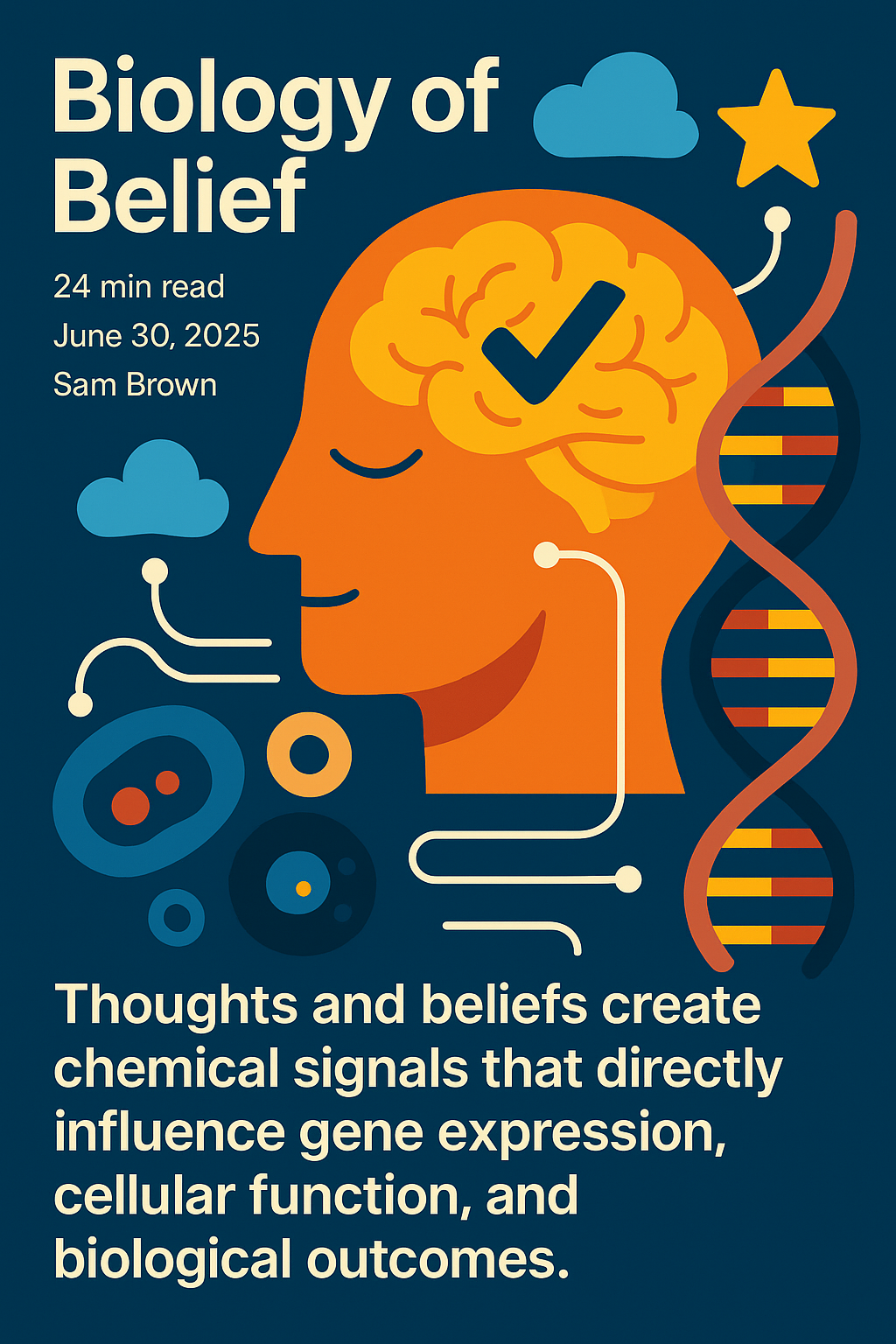
The Epigenetic Revolution
For decades, scientists believed that DNA was destiny - that the genes you inherited determined your health, your traits, and your potential. But the field of epigenetics has revealed that genes are not fixed instructions; they're more like piano keys that can be played in infinite combinations.
Epigenetic mechanisms - chemical tags that attach to DNA and control gene expression - are profoundly influenced by consciousness. Your thoughts, emotions, and beliefs create chemical signals that activate or silence specific genes, effectively rewriting your genetic expression in real-time.
Bentov proposed that consciousness operates as an epigenetic modifier, using several mechanisms:
- Neurotransmitter signaling: Thoughts create neurotransmitters that directly influence gene expression
- Hormonal cascades: Beliefs trigger hormonal responses that activate genetic programs
- Electromagnetic fields: Consciousness generates fields that affect cellular function
- Quantum information transfer: Thoughts encode information that modifies quantum biological processes
- Intentional field effects: Focused consciousness creates fields that organize biological systems
The Genetic Plasticity Principle
Bentov discovered that genetic expression is far more plastic than conventional biology suggests. While your DNA sequence remains constant, which genes are active changes constantly based on consciousness. A single belief can activate or silence hundreds of genes within minutes, creating cascading effects throughout your biology.
Belief as Biological Instruction
Your beliefs function as biological instructions that your cells obey. When you believe something strongly, your brain translates that belief into chemical signals that travel throughout your body, instructing cells how to behave.
The placebo effect: Perhaps the most dramatic demonstration of belief biology. When people believe they're receiving effective treatment, their bodies often produce the same physiological changes as if they had received actual medication. Parkinson's patients produce dopamine, depressed patients produce serotonin, and pain patients produce endorphins - all based purely on belief.
The nocebo effect: The dark side of belief biology. When people believe something will harm them, their bodies create stress responses, inflammation, and even tissue damage. Patients who believe chemotherapy will make them sick often experience side effects before receiving any actual medication.
Spontaneous remission: Cases where terminal illnesses disappear overnight often correlate with profound shifts in belief. When someone truly believes they can heal, their biology reorganizes to make it happen.
Aging and longevity: Research shows that people's beliefs about aging directly influence how they age. Those who believe aging is inevitable decline rapidly, while those who believe they can stay healthy and active maintain youthful biology much longer.
"Your beliefs are not just thoughts - they are biological commands that your cells obey without question. Change your beliefs and you change your biology." - Itzhak Bentov
The Mechanisms of Belief Biology
Bentov identified several specific mechanisms through which beliefs influence biology:
Stress response modification: Beliefs directly affect your hypothalamic-pituitary-adrenal (HPA) axis, controlling cortisol and stress hormone production. Positive beliefs about challenges create eustress (positive stress) while negative beliefs create distress (damaging stress).
Immune system modulation: Beliefs affect immune function through multiple pathways. Optimistic beliefs enhance immune activity, while pessimistic beliefs suppress it. This explains why positive people get sick less often and recover faster.
Cellular regeneration: Beliefs influence stem cell activity and tissue regeneration. Beliefs in healing activate regenerative processes, while beliefs in permanent damage suppress them.
Metabolic programming: Beliefs about food, exercise, and health affect metabolism, insulin sensitivity, and energy production. People who believe they're eating healthy food get more nutritional benefit from it, regardless of actual nutritional content.
Neuroplasticity enhancement: Beliefs in learning and growth enhance neuroplasticity, while beliefs in fixed ability suppress it. This creates self-fulfilling prophecies about intelligence and capability.
Master Your Biological Blueprint
Conscious control of gene expression
The Biology of Belief
Unleashing the power of consciousness, matter & miracles through understanding how beliefs control biology at the cellular level.
You Are the Placebo
Making your mind matter by understanding the science behind placebo effects and how to harness them for healing and transformation.
Mind to Matter
The astonishing science of how your brain creates material reality, including the biology of belief and consciousness-based healing.
Consciousness and Cellular Intelligence
One of Bentov's most revolutionary proposals was that individual cells possess their own consciousness and intelligence. In his model, each cell is not just a biochemical machine but a conscious entity that responds to belief fields.
This cellular consciousness explains several phenomena that conventional biology struggles with:
Cellular cooperation: How do trillions of cells coordinate to create a functioning body? In Bentov's model, they communicate through consciousness fields, sharing information and coordinating activities through non-local connections.
Healing intelligence: How do wounds know how to heal? How do immune cells know which cells to attack and which to protect? Cellular consciousness provides the intelligence that guides these processes.
Developmental precision: How does a single fertilized egg develop into a complex organism with trillions of cells in exactly the right places? Cellular consciousness fields guide development through morphogenetic fields of belief and intention.
Regenerative capacity: Why can some animals regenerate entire limbs while mammals have limited regenerative ability? Bentov proposed that this reflects differences in collective cellular belief about what's possible.
The Cellular Belief Protocol
Bentov developed techniques for communicating with cellular consciousness: (1) Enter deep meditative states to quiet mental chatter, (2) Focus attention on specific body areas or systems, (3) Send clear, positive beliefs about health and function, (4) Maintain consistent belief fields through daily practice, (5) Trust the cellular intelligence to implement changes according to its own wisdom.
Belief, Aging, and Mortality
Perhaps the most profound implications of belief biology concern aging and mortality. Bentov proposed that many aspects of aging are belief-driven rather than genetically determined.
Telomere length: Research shows that beliefs about stress and aging affect telomere length, the protective caps on chromosomes that determine cellular lifespan. Positive beliefs about aging correlate with longer telomeres.
Stem cell activity: Beliefs about regeneration and healing affect stem cell proliferation and differentiation. People who believe in their body's ability to heal show enhanced stem cell activity.
Metabolic rate: Beliefs about age affect basal metabolic rate, hormone production, and energy levels. People who feel younger than their chronological age show younger biological markers.
Mortality correlations: Large-scale studies show that beliefs about health and longevity predict actual lifespan better than many genetic factors. Optimists live significantly longer than pessimists, even controlling for other variables.
Rewrite Your Aging Blueprint
Consciousness-based approaches to longevity
Lifespan: Why We Age - and Why We Don't Have To
Revolutionary science of why we age and how to slow, stop, or even reverse aging through understanding the biology of belief and consciousness.
Aging Backwards
Reverse the aging process and look 10 years younger in 30 minutes a day through movement, mindset, and belief-based approaches to cellular health.
Younger Next Year
Live strong, fit, and sexy until you're 80 and beyond through understanding the biology of belief and exercise-based age reversal.
The Future of Belief Biology
As we develop better understanding of belief biology, we're discovering new applications and implications:
Consciousness-based medicine: Medical treatments that work directly with belief fields to enhance healing and reduce side effects.
Epigenetic therapies: Treatments that modify gene expression through consciousness-based interventions rather than chemical drugs.
Belief optimization: Systematic approaches to identifying and transforming limiting beliefs that affect health and well-being.
Conscious aging: Programs that help people maintain youthful biology through belief-based approaches to aging.
Collective belief fields: Understanding how group beliefs affect individual biology, opening new approaches to public health and social healing.
Bentov's work on the biology of belief reveals that we are not victims of our genes or prisoners of our biology. We are conscious beings with the power to rewrite our biological reality through the power of belief.
Your beliefs are not just thoughts - they are the architects of your biology. Choose them wisely, and you choose your health, your longevity, and your potential.
The future of medicine is not just in better drugs or more precise surgeries - it's in understanding and harnessing the power of consciousness to create health from the inside out.