What if consciousness isn't something that happens in your brain, but rather something your brain tunes into like a radio receiver? This revolutionary idea forms the cornerstone of Itzhak Bentov's mechanics of consciousness - a framework that transforms everything we thought we knew about awareness, reality, and the nature of existence itself.
Bentov, a brilliant inventor and mystic who tragically died in a plane crash in 1979, left behind a legacy that continues to shake the foundations of neuroscience, physics, and philosophy. His model doesn't just explain consciousness - it explains everything as a manifestation of vibratory phenomena, from the smallest quantum particle to the vastest galaxy.
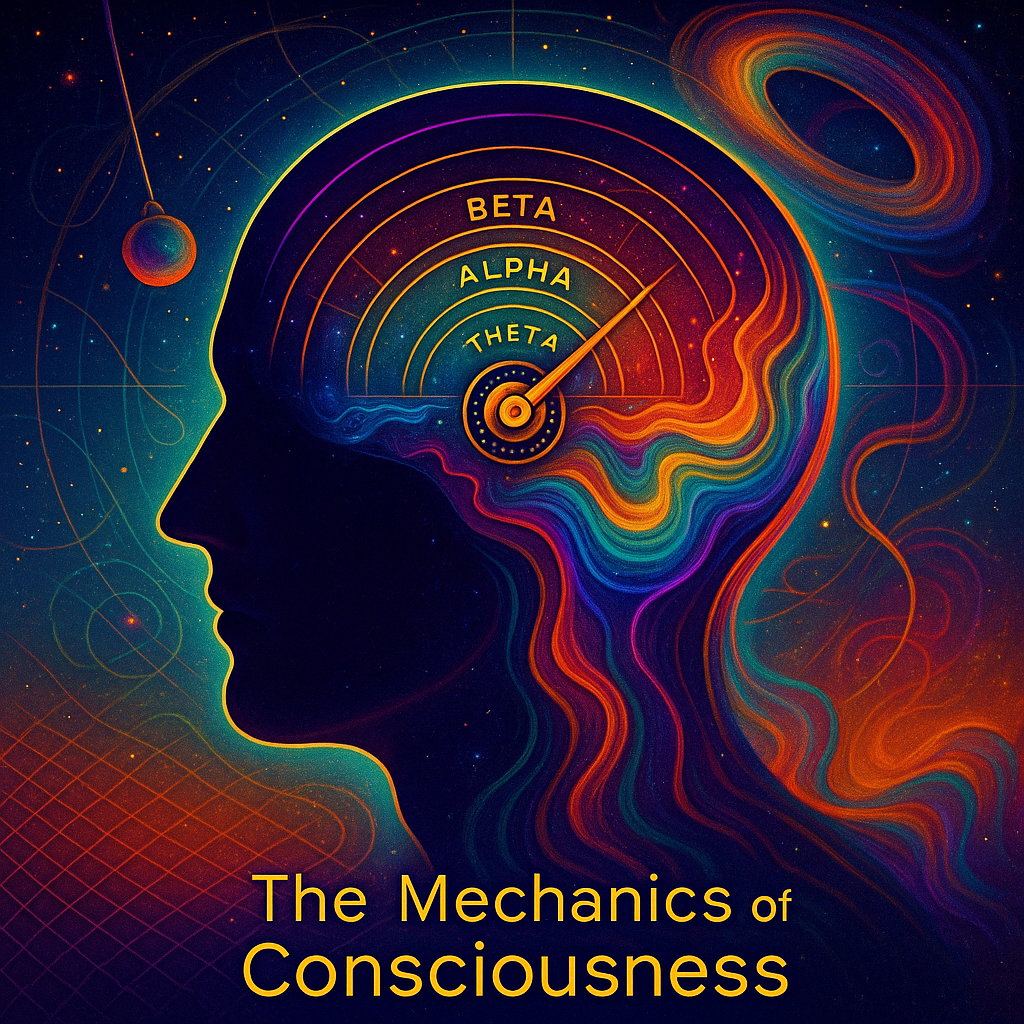
The Radio Receiver Model of Consciousness
Traditional neuroscience tells us that consciousness emerges from complex computations in the brain's neural networks. But Bentov proposed something far more radical: your brain doesn't generate consciousness - it receives it.
Think of it this way: a radio doesn't create the music it plays. It tunes into specific frequencies in the electromagnetic spectrum and converts those invisible waves into audible sound. Similarly, Bentov suggested that your brain acts as a sophisticated receiver, tuning into specific frequencies of what he called the "universal consciousness field."
The Tuning Fork Principle
Bentov discovered that different states of consciousness correspond to specific vibratory frequencies. Just as a tuning fork resonates with particular sound frequencies, different regions of the brain resonate with different consciousness frequencies. When you meditate, your brain isn't creating a peaceful state - it's tuning into the peaceful frequency that already exists in the universal field.
The Spectrum of Awareness
One of Bentov's most profound insights was that consciousness isn't binary (awake or asleep) but rather a continuous spectrum of vibratory states. He identified multiple distinct frequency bands:
- Beta (14-30 Hz): Ordinary waking consciousness, logical thinking, survival mode
- Alpha (8-13 Hz): Relaxed awareness, creativity, light meditation
- Theta (4-7 Hz): Deep meditation, intuition, memory access, hypnagogic states
- Delta (0.5-3 Hz): Deep sleep, unconsciousness, but also profound spiritual states
- Gamma (30-100+ Hz): Peak awareness, spiritual awakening, unity consciousness
But Bentov didn't stop at brainwaves. He proposed that these frequencies extend far beyond what EEG machines can measure, into what he called "hyper-consciousness" states where individual awareness merges with universal awareness.
The Pendulum and the Torus
Bentov used two primary metaphors to explain his mechanics of consciousness: the pendulum and the torus (a donut-shaped form). The pendulum represents the oscillating nature of consciousness - constantly moving between polarities: awake and asleep, focused and diffuse, individual and universal.
The torus represents the flow of consciousness energy. Bentov suggested that consciousness doesn't just exist in the brain but flows through the body in a toroidal pattern, entering through the crown of the head, flowing down through the center, and exiting through the extremities before looping back around.
"Consciousness is not a by-product of the brain. The brain is a by-product of consciousness." - Itzhak Bentov
Essential Bentov Reading
Master the fundamentals of consciousness mechanics
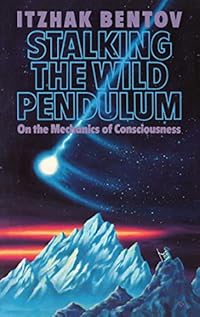
Stalking the Wild Pendulum
Bentov's masterwork on consciousness mechanics. The definitive guide to understanding awareness as frequency.
The Holographic Universe
Groundbreaking exploration of the holographic model of reality and consciousness. Essential companion to Bentov's work.

The Field
Scientific investigation of the zero-point field and how consciousness connects to universal energy.
The Mechanics of Frequency Modulation
Bentov's model explains how we can consciously shift our state of awareness. Just as you can turn the dial on a radio to find different stations, you can "tune" your consciousness to different frequencies through various practices.
Meditation, for example, doesn't create a peaceful state from nothing. Instead, it quiets the "static" of beta-wave thinking, allowing your consciousness receiver to pick up the clearer signal of alpha and theta frequencies. This is why experienced meditators can access profound states of awareness - their brains have become better receivers.
The Amplification Effect
Bentov discovered that certain practices don't just tune consciousness - they amplify it. Group meditation, for instance, creates what he called "resonant amplification," where multiple consciousness receivers tuned to the same frequency create a stronger signal. This explains why spiritual gatherings, prayer circles, and even concerts can produce powerful transformative experiences.
Consciousness Beyond the Brain
Perhaps Bentov's most controversial claim was that consciousness isn't confined to the brain at all. He proposed that the brain is merely the primary receiver, but consciousness itself exists as a field that permeates the entire body and extends beyond it.
This explains phenomena that traditional neuroscience struggles with:
- Near-death experiences: When the brain stops functioning, consciousness continues because it's not generated by the brain
- Out-of-body experiences: Consciousness can "tune" to frequencies that allow perception beyond physical senses
- Remote viewing: Consciousness can access information from distant locations by tuning to non-local frequencies
- Precognition: Consciousness can access information from "future" frequencies that already exist in the quantum field
The Implications for Reality Creation
If Bentov's model is correct, it changes everything about how we understand reality creation. Your thoughts aren't just electrical impulses in your brain - they're frequencies that you transmit into the universal consciousness field. And just as a radio transmitter can influence the signals in the air, your transmitted frequencies can influence the reality you experience.
This is the scientific basis for manifestation, prayer, and intention. When you hold a clear intention, you're not just thinking - you're transmitting a specific frequency into the quantum field. The clearer and more sustained your transmission, the more influence you have on the reality you experience.
"The universe is not a collection of separate things - it is one thing, vibrating in infinite patterns. To understand vibration is to understand the language of creation itself." - Itzhak Bentov
Master Consciousness Mechanics
Apply these principles to transform your reality
Quantum Enigma
Physics encounters consciousness in this mind-expanding exploration of quantum mechanics and awareness.

Becoming Supernatural
Learn how ordinary people are doing the uncommon by mastering their consciousness mechanics.
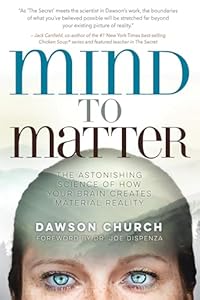
Mind to Matter
The astonishing science of how your brain creates material reality through consciousness mechanics.
The Path Forward: Practicing Consciousness Mechanics
Understanding Bentov's model is just the beginning. The real power comes from applying these principles to your own consciousness. Start by recognizing that you're not just a passive observer of reality - you're an active participant in its creation.
Practice tuning your consciousness through meditation, mindfulness, and intentional focus. Pay attention to how different states feel, and you'll begin to develop an intuitive sense of the frequencies you're accessing. With time and practice, you can learn to consciously choose your reality by choosing your frequency.
The mechanics of consciousness aren't just theoretical - they're the operating system of your reality. Master them, and you master your experience of life itself.