Cut a hologram in half and you don't get two pieces of a picture - you get two complete pictures, each slightly less clear than the original. Cut those halves in half again, and you get four complete pictures. Keep cutting, and every tiny fragment contains the entire image. This isn't magic; it's the nature of holographic information storage. And according to Itzhak Bentov, it's also how your brain stores memory and consciousness.
Bentov's holographic brain theory revolutionizes everything we think we know about memory, consciousness, and the nature of mind itself. He proposed that the brain doesn't store memories in specific neurons or synapses, but rather as interference patterns distributed throughout the entire brain - just like a hologram stores an image.
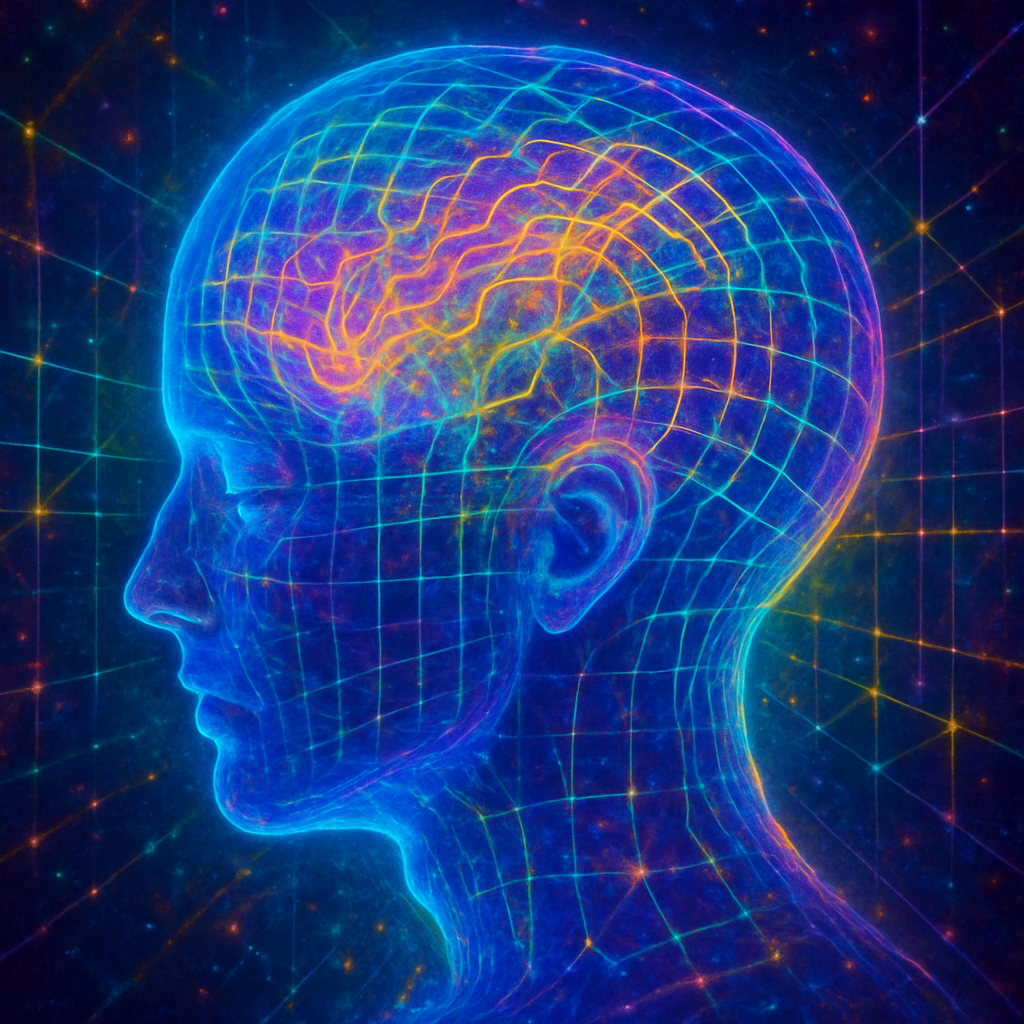
The Problem with Localized Memory
Traditional neuroscience tells us that memories are stored in specific neurons and synapses. When you remember your first kiss, the theory goes, a particular network of neurons fires, recreating the experience. But this model has serious problems:
- The capacity problem: We can store millions of memories, but there aren't enough neurons to assign a unique pattern to each one
- The durability problem: Neurons die constantly, yet our memories remain stable for decades
- The access problem: We can recall memories from any starting point, not just from a specific "address" in the brain
- The association problem: Memories naturally associate with each other in complex ways that localized storage can't easily explain
- The consciousness problem: Localized storage doesn't explain the unified, integrated nature of conscious experience
Bentov recognized that these problems disappear if we think of memory not as information stored in specific locations, but as interference patterns distributed throughout the entire brain.
How Holographic Memory Works
A hologram is created by splitting a laser beam into two parts. One part (the reference beam) shines directly onto a photographic plate. The other part (the object beam) bounces off the object being recorded and then hits the plate. The interference pattern between these two beams creates the hologram.
Bentov proposed that the brain works similarly. Every experience creates a "reference wave" (the brain's baseline state) and an "object wave" (the pattern created by the experience). The interference pattern between these waves is distributed throughout the brain as a memory.
The key insight is that this interference pattern isn't stored in any specific location - it's encoded in the relationships between neurons throughout the entire brain. Every neuron participates in storing every memory, just as every part of a holographic plate contains the entire image.
The Whole in Every Part
This explains why brain damage doesn't necessarily destroy specific memories. If you damage part of a holographic plate, the whole image is still there, just slightly less clear. Similarly, if you damage part of the brain, memories remain intact but may become harder to access or less vivid. The information isn't lost - it's just distributed across fewer neurons.
Evidence for the Holographic Brain
Bentov didn't just theorize - he pointed to compelling evidence from neuroscience research:
Lashley's rat experiments: In the 1920s, Karl Lashley trained rats to run mazes, then systematically removed different parts of their brains. No matter which part he removed, the rats could still navigate the maze. The memory wasn't in any specific location - it was distributed throughout the brain.
Penfield's stimulation studies: Wilder Penfield stimulated different areas of patients' brains during surgery and found that the same memory could be triggered from multiple locations. A memory of childhood wasn't stored in one place - it was accessible from many different neural sites.
Split-brain patients: People whose corpus callosum (the connection between brain hemispheres) has been severed can still access memories with either hemisphere. If memories were localized, they should be trapped in one hemisphere.
Neuroplasticity: When parts of the brain are damaged, other areas can take over their functions. This shouldn't be possible if functions were stored in specific locations, but it makes perfect sense if functions are stored holographically.
Consciousness as a Holographic Process
Bentov extended the holographic model beyond memory to consciousness itself. He proposed that consciousness isn't produced by specific brain regions, but rather emerges from the interference patterns created by the entire brain's activity.
This explains the "binding problem" in neuroscience - how different aspects of experience (color, shape, sound, emotion) are integrated into a unified conscious experience. If each aspect is processed in different brain areas, how do they come together as a single experience?
The holographic model solves this: each aspect creates its own interference pattern, and these patterns interact to create a "meta-interference pattern" - the hologram of conscious experience. The whole is literally contained in each part, so integration isn't a problem - it's fundamental to how the system works.
"The brain is not a computer that stores data in specific addresses. It is a holographic system that encodes information as interference patterns distributed throughout its entire structure." - Itzhak Bentov
Master Memory Science
Essential reading for understanding brain function
The Holographic Universe
The revolutionary model of reality based on holographic principles, including detailed exploration of the holographic brain theory.
The Brain That Changes Itself
Stories of personal triumph from the frontiers of brain science, including evidence for holographic memory distribution.
The Mind's I
Fantasies and reflections on self and soul exploring the nature of consciousness and memory from multiple perspectives.
The Quantum Brain Connection
Bentov's holographic brain theory connects beautifully with quantum consciousness theories. If the brain stores information as interference patterns, and quantum mechanics describes how interference patterns work, then consciousness may be fundamentally quantum-mechanical.
This explains several mysteries:
- Non-local memory: Memories can be accessed from anywhere in the brain because they're distributed holographically
- Quantum cognition: The brain can process multiple possibilities simultaneously, just as quantum systems exist in superposition
- Entangled associations: Memories naturally associate with each other because they're all part of the same interference pattern field
- Uncertainty principle: The more precisely you try to locate a specific memory, the less clearly you can access its details - just like quantum uncertainty
Implications for Consciousness and Identity
If the brain works holographically, it changes everything about how we understand consciousness and personal identity:
Consciousness is non-local: Your awareness isn't in your brain - it's in the interference patterns that your brain creates. This explains out-of-body experiences and near-death experiences where consciousness seems to operate independently of the brain.
Identity is distributed: You don't exist in any specific brain region. Your identity is encoded in the relationships between all parts of your brain. This explains why people with significant brain damage can still maintain their sense of self.
Memory is creative: Every time you recall a memory, you're not retrieving a fixed recording - you're recreating the interference pattern. This explains why memories change over time and why imagination and memory are so closely linked.
Learning is holographic: When you learn something new, you're not adding information to a specific location - you're modifying the entire interference pattern of your brain. This is why learning one thing can improve seemingly unrelated abilities.
"The brain is a hologram that reads holograms. Consciousness is the light that illuminates both." - Itzhak Bentov
Apply Holographic Principles
Transform your cognitive abilities
Limitless
Upgrade your brain, learn anything faster, and unlock your exceptional life with the world's #1 brain coach.
Stalking the Wild Pendulum
The foundational text on the holographic nature of consciousness and the universe.
Moonwalking with Einstein
The art and science of remembering everything, exploring the limits of holographic memory techniques.
The Future of Holographic Brain Research
Modern neuroscience is increasingly validating Bentov's holographic model. Advanced brain imaging techniques show that memories activate distributed patterns across the brain, not localized regions. Studies of consciousness during anesthesia reveal that consciousness fades when neural coherence breaks down - exactly what holographic theory predicts.
Research into psychedelics shows that these substances temporarily disrupt the brain's normal interference patterns, allowing different holographic configurations to emerge. This explains why psychedelic experiences can be so profound and transformative - they literally reconfigure the hologram of consciousness.
Perhaps most exciting is research into brain-computer interfaces. Holographic models suggest that we don't need to interface with specific neurons to access memories or thoughts - we need to understand and replicate the interference patterns. This could lead to far more sophisticated and natural neural interfaces.
Practicing Holographic Awareness
Understanding the holographic brain isn't just theoretical - it has practical applications for enhancing memory, creativity, and consciousness:
Holistic learning: Instead of trying to memorize facts in isolation, create rich, multi-sensory experiences. The more interference patterns you create, the more robustly the information will be stored.
Associative memory: Link new information to existing memories. Since all memories are part of the same interference pattern field, associations strengthen the entire pattern.
Meditative states: Practices that create coherent brain states (like meditation) enhance the clarity of the holographic interference patterns, making consciousness more vivid and memory more accessible.
Creative problem-solving: Since the holographic brain processes multiple possibilities simultaneously, creative insights often come when you stop consciously thinking about a problem and allow the holographic process to work.
Bentov's holographic brain theory doesn't just explain how memory works - it reveals that your mind is far more powerful and mysterious than conventional neuroscience suggests. You don't just have a brain; you are a living hologram, constantly creating and recreating reality through the interference patterns of consciousness.
Understanding this changes everything. You're not limited by your neurons or synapses. You're limited only by the clarity of your consciousness and the richness of the interference patterns you create. Master the holographic nature of your mind, and you master the art of reality itself.